|
|
|
|
|
 |
| Welcome
|
|
|
You are not
currently logged in.
|
|
|
|
|
|
|
|
|
|
|
Welcome to our website. IAFF Local 2623 represents the 17 career firefighters and officers employed by the Fairview Fire District in Poughkeepsie, NY. The district covers approximately 4.5 square miles in the Towns of Poughkeepsie and Hyde Park, NY. Firefighters answer over 1700 alarms annually.
SHOW YOUR SUPPORT- SIGN OUR GUEST BOOK.
Please read the Legal Section regarding use of information and content from this website.
|
|
|
|
|
|
|
|
|
|
|
|
|
|
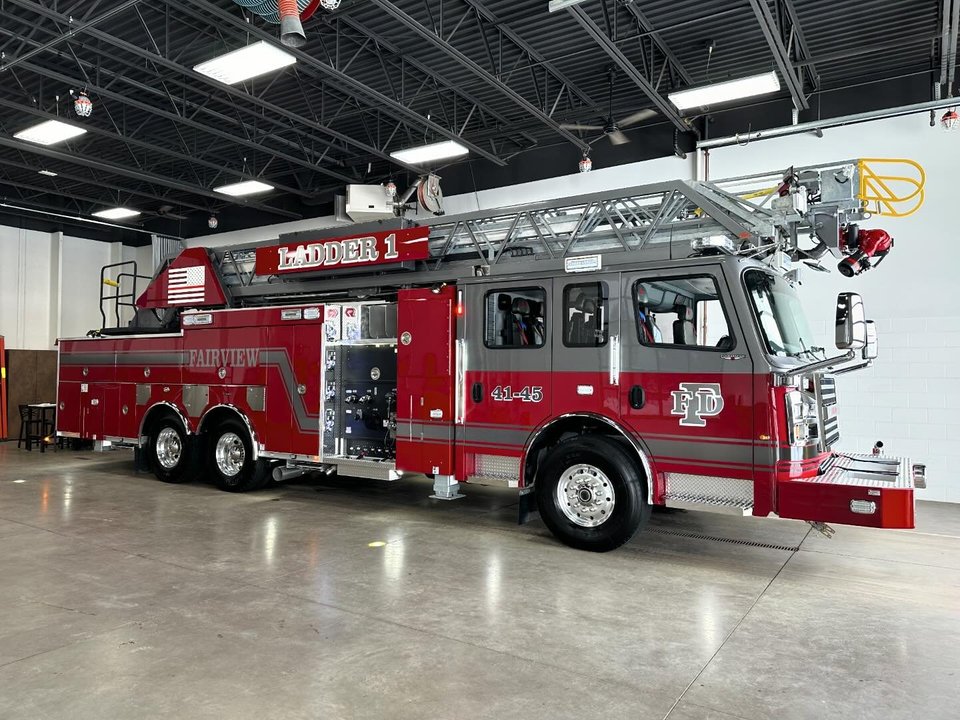
With much anticipation the new ladder truck is finally almost here as the truck committee went out to do the final inspection of our new Rosenbauer ladder truck. This truck will be replacing our aging 2002 E-One ladder truck once it returns home after being showcased at FDIC. Read More...
|
|
|
|
|
At approximately 1:09 pm, the Fairview Fire District was dispatched for a report of an explosion with a boat on fire at the Brass Anchor, located in the Town of Hyde Park.
Fire fighters arrived to find a boat that was fully involved in fire with exposure to the dock area. Read More...
|
|
|
July 5, 2017 - Fairview firefighters were called mutual to the scene of a working structure fire on 45 Fitchett Street in th e City of Poughkeepsie tonight. 41-11 responded immediately on Poughkeepsie FD commands call of a 10-75 assignment to the scene. Upon arrival Fairview firefighters were assigned to with a back up hand line to support the initial in crews from Poughkeepsie FD. Read More...
|
|
|
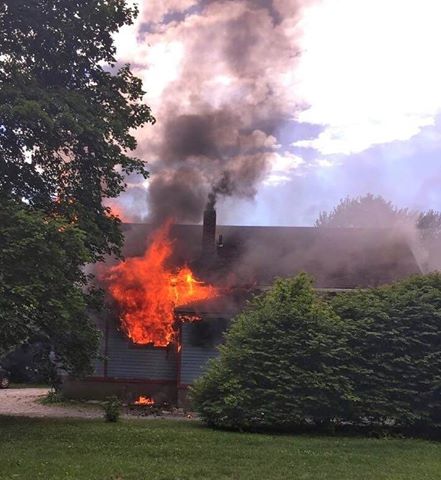
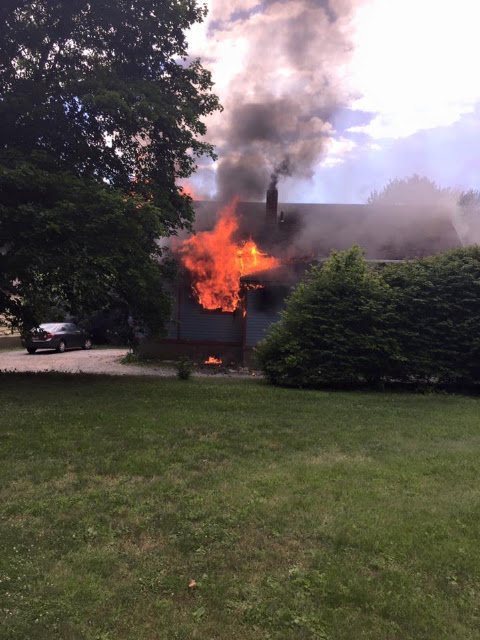
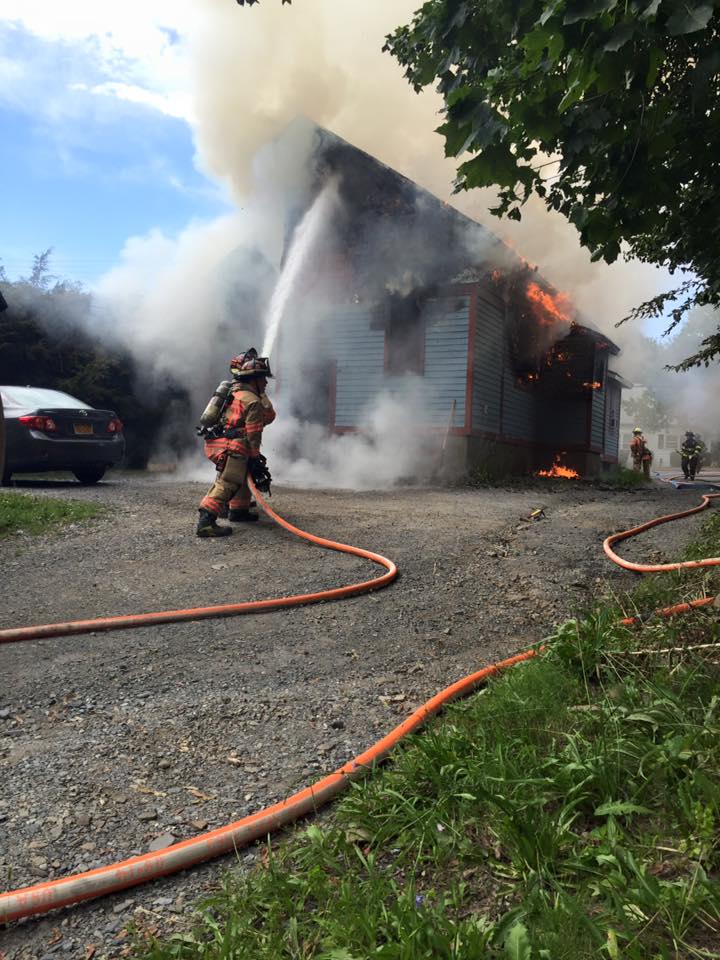
On Friday, July 15th at approximately 3:02 pm, the Fairview Fire District was dispatched for a reported fire in a residential structure on West Dorsey Lane in the Town of Hyde Park. Upon arrival, firefighters found the first floor and the rear of the structure located at 80 West Dorsey Lane involved in fire. A structure in the rear and a vehicle were in danger of catching fire. Additional mutual aid resources were requested to the scene with a request of a second alarm. Firefighters were able to contain the fire to the original building with the fire being declared under control within an hour of arrival. A dog was rescued from the fire building by firefighters. With the day’s temperatures and humidity, the firefighting was more difficult than usual requiring a rehab area being set up for the firefighters. Two firefighters suffered minor injuries at the scene and were treated and released. No occupants were injured in the fire. The occupants were assisted by the Red Cross. The structure suffered extensive damage and will not be habitable in the near future.
Agencies assisting at the scene included the City of Poughkeepsie Fire Department, Roosevelt Fire District, Pleasant Valley Fire District, Arlington Fire District, Hyde Park Fire Department, Lagrange Fire District, Mobile Life Support Services, Hyde Park Police, New York State Police, Dutchess County Sherriff Office, Dutchess County Department of Emergency Response, and the Hyde Park Fire Inspector. Relocating agencies included the West Clinton Fire District and the Highland Fire District.
The fire is currently under investigation. The Fairview Fire District would like to thank many individuals and businesses who kindly donated water at the fire scene so that the firefighters may stay hydrated on this hot day.
|
|
|
|
|
|
|
|
|
Member Login |
|
|
|
|
|
|
|
|
|
| |
Site Search |
|
|
|
|
|
|
|
|
|
| |
|
|
|
| S |
M |
T |
W |
T |
F |
S |
|
|
1
|
2
|
3
|
4
|
5
|
6
|
|
7
|
8
|
9
|
10
|
11
|
12
|
13
|
|
14
|
15
|
16
|
17
|
18
|
19
|
20
|
|
21
|
22
|
23
|
24
|
25
|
26
|
27
|
|
28
|
29
|
30
|
31
|
|
|
|
|
|
|
|
|
|
|
|
|
|
| |
Important Links |
|
|
|
|
|
|
|
|
|
|



 CAPTAIN.pdf